Anarcho-Communism
Anarchist
- Diplomacy · Pacifist 96%
- Immigration · Multiculturalism 95%
- Structure · Federal 93%
Home / Test guides
Read paired percentages, midpoint scores and ideology or country matches with a worked 12 Axes example.
Choose a test length →See what you can save and share after the test. The cards use example scores. Select an image to see it at full size.
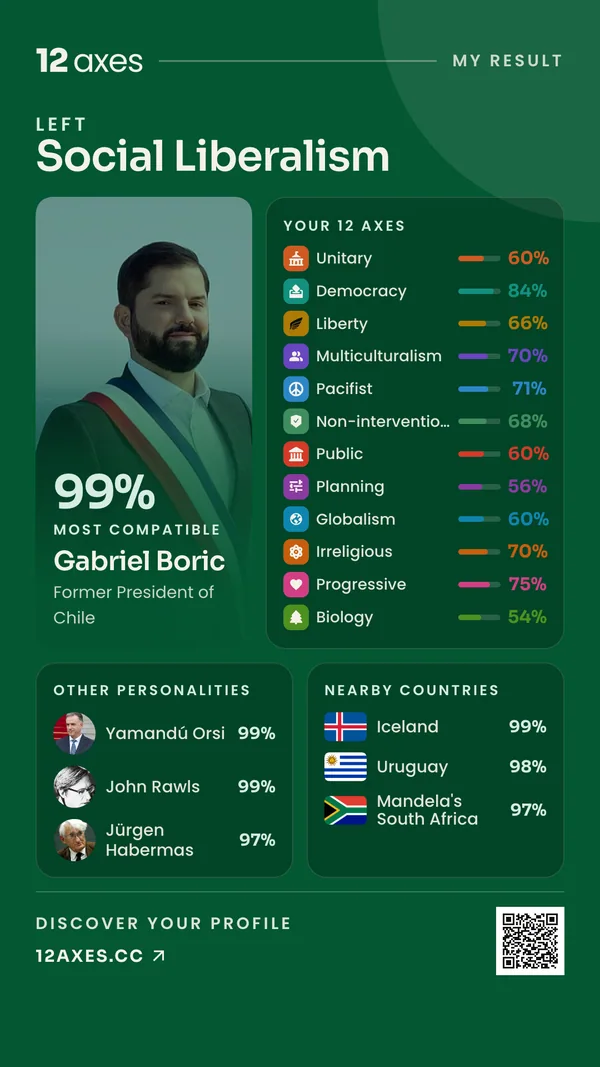
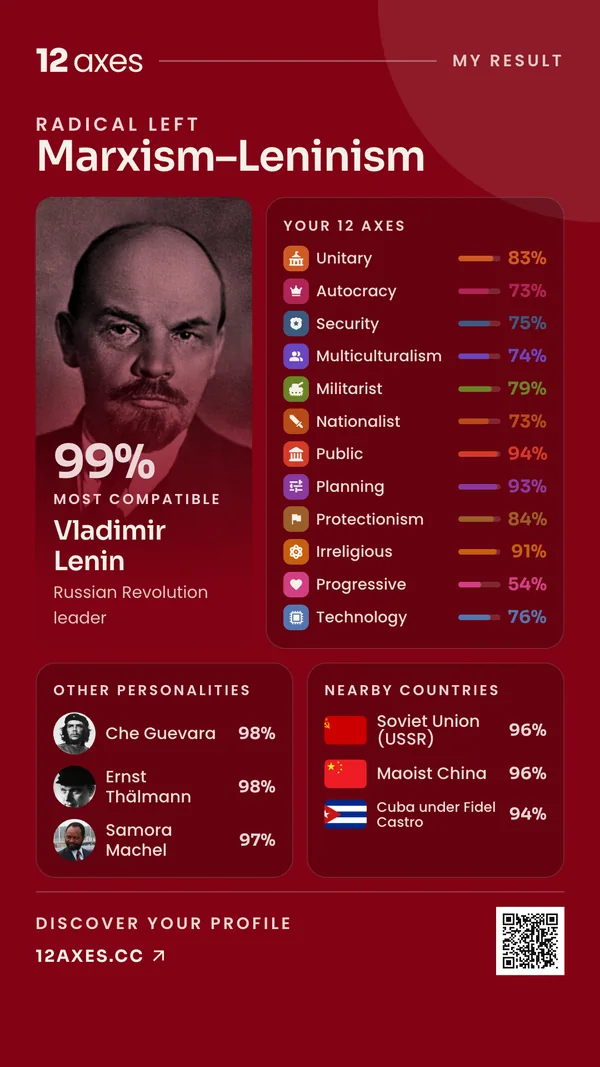
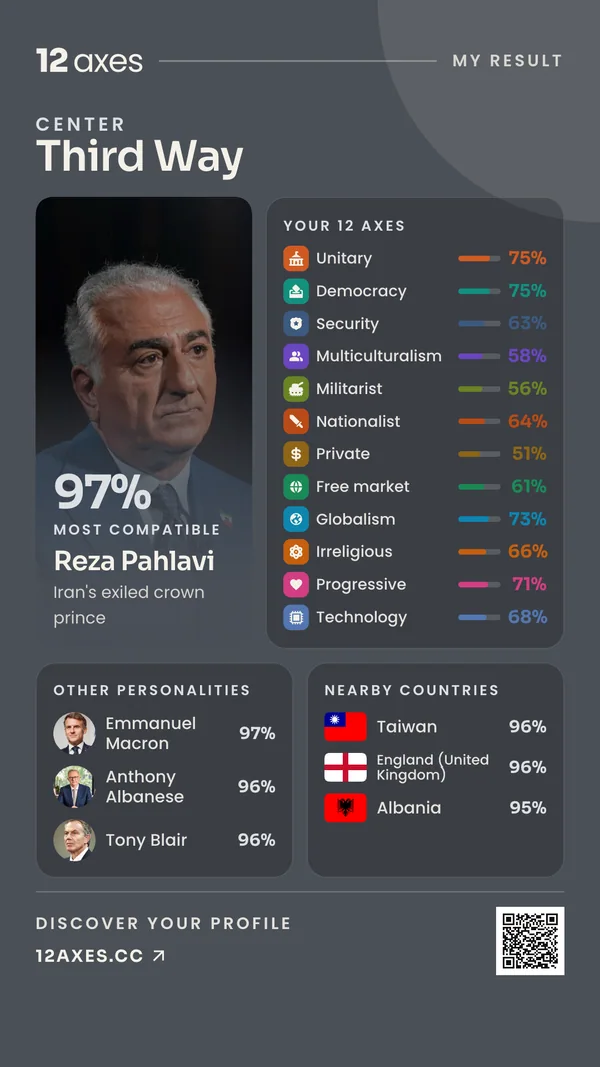
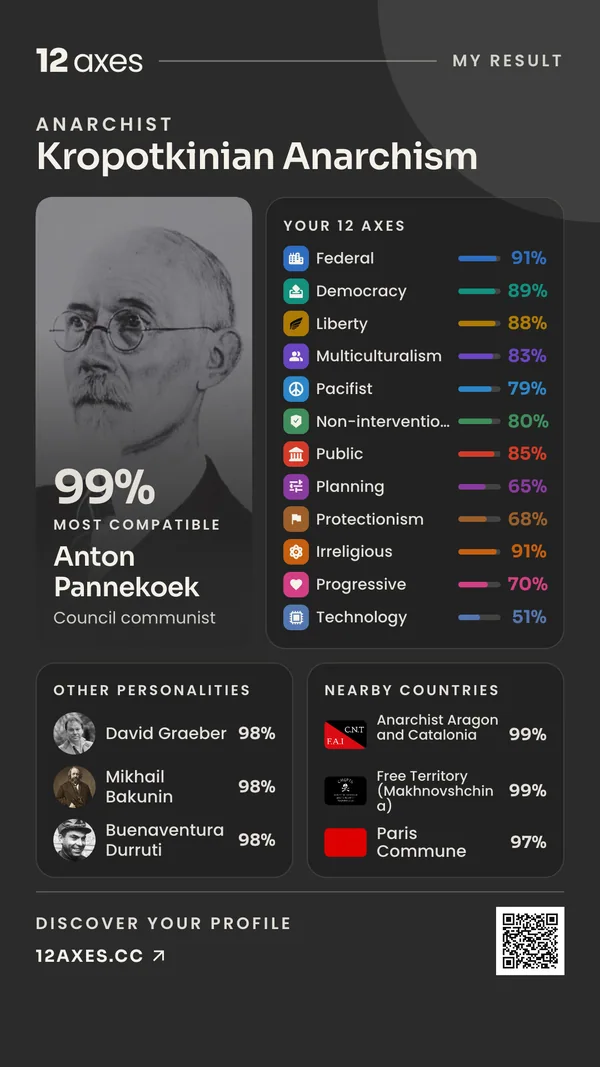
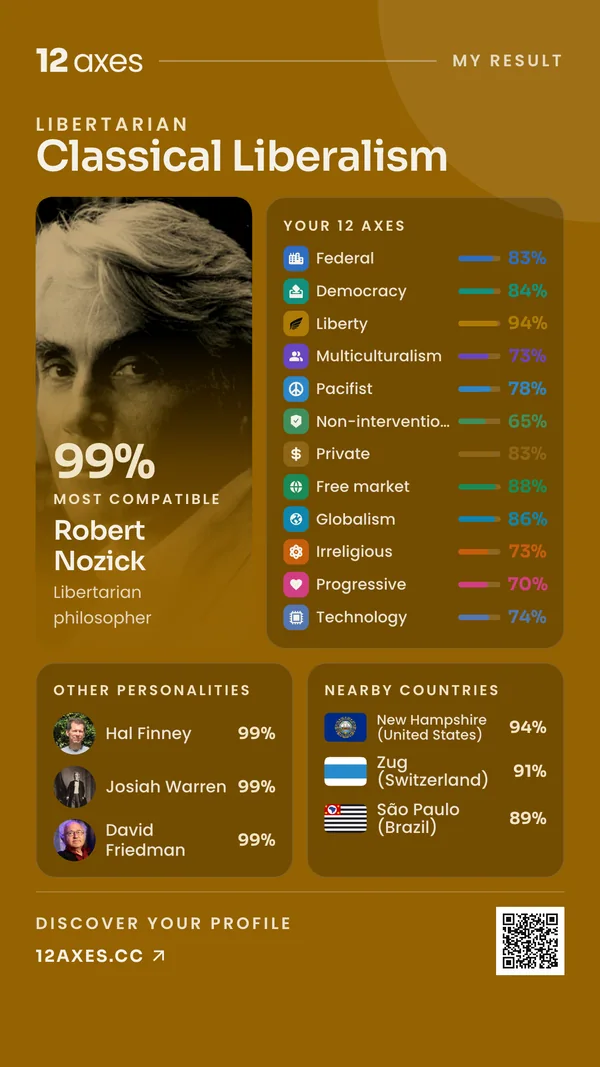
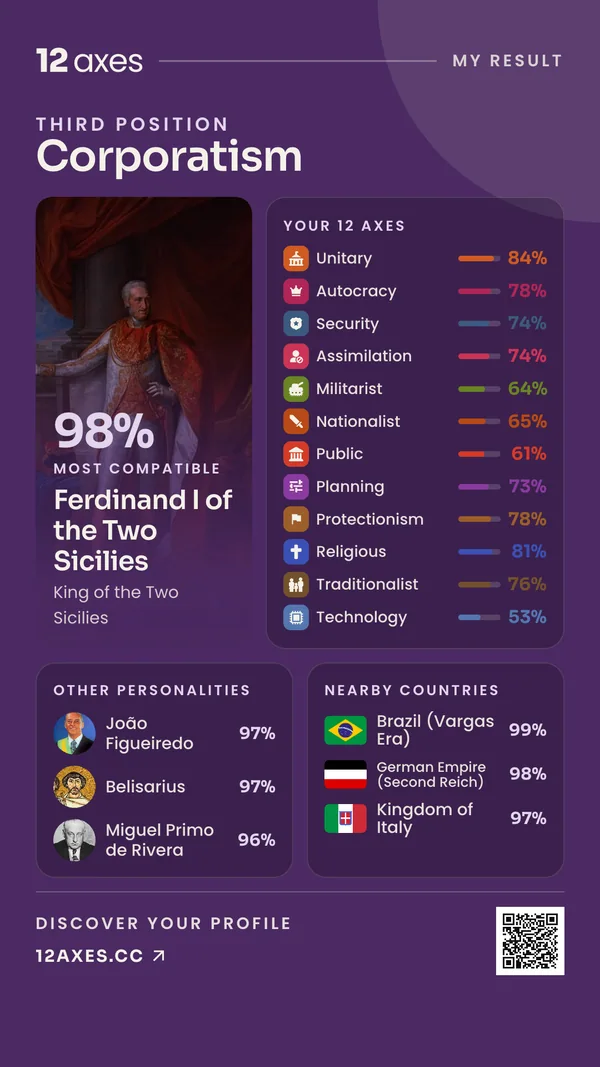
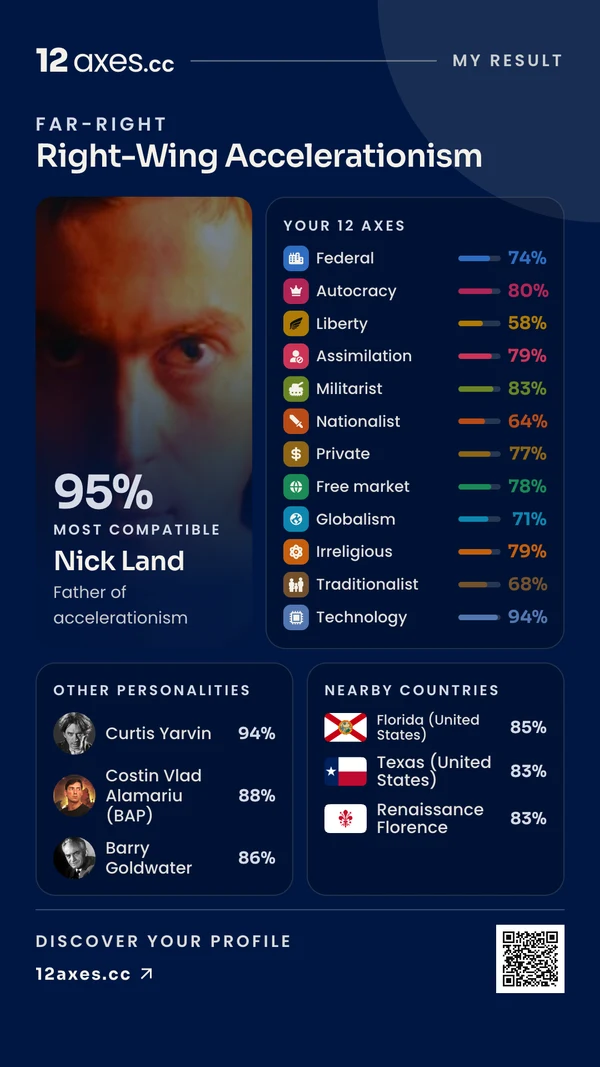
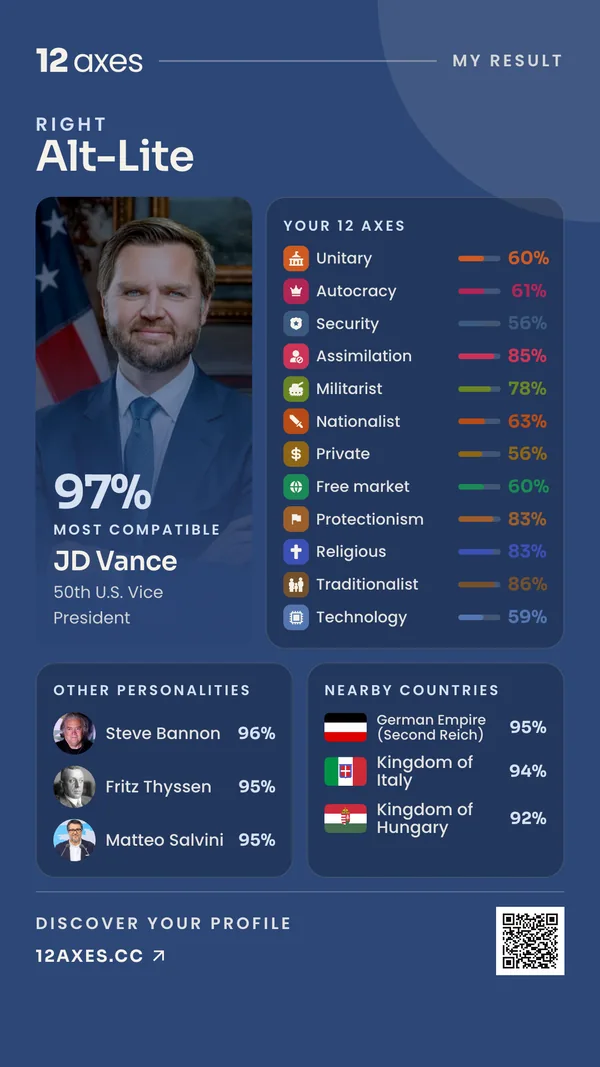
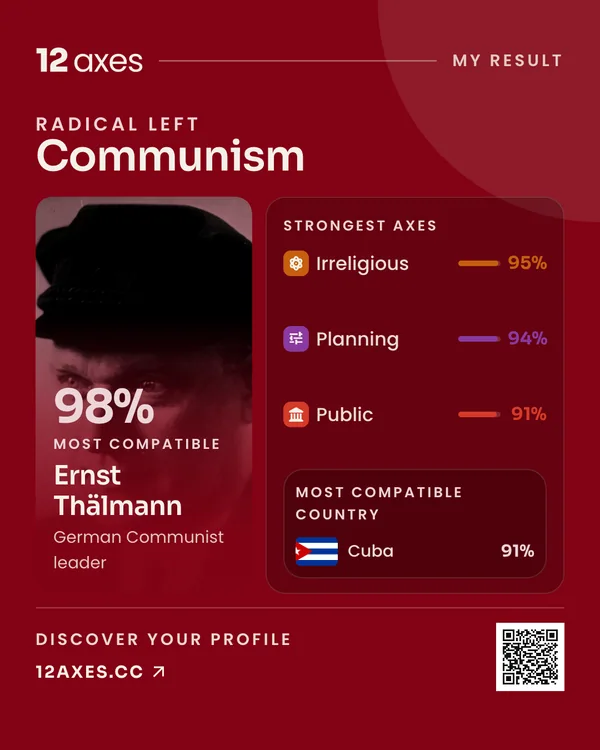

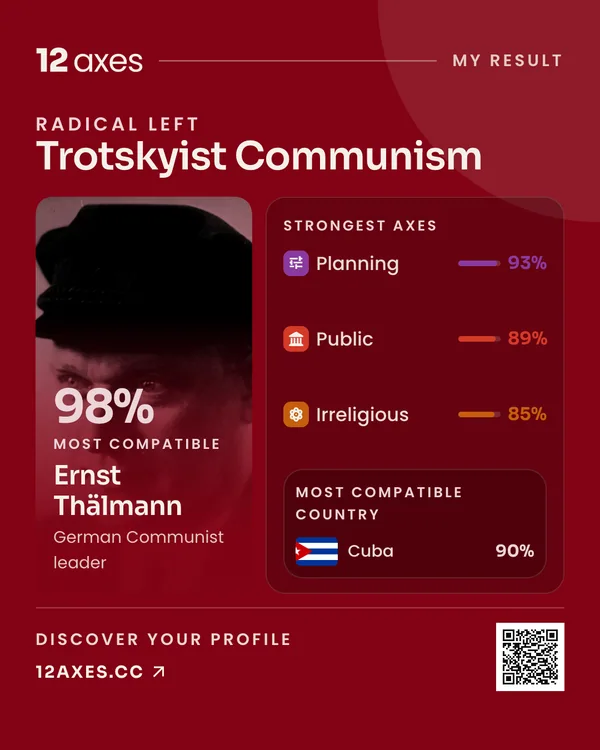

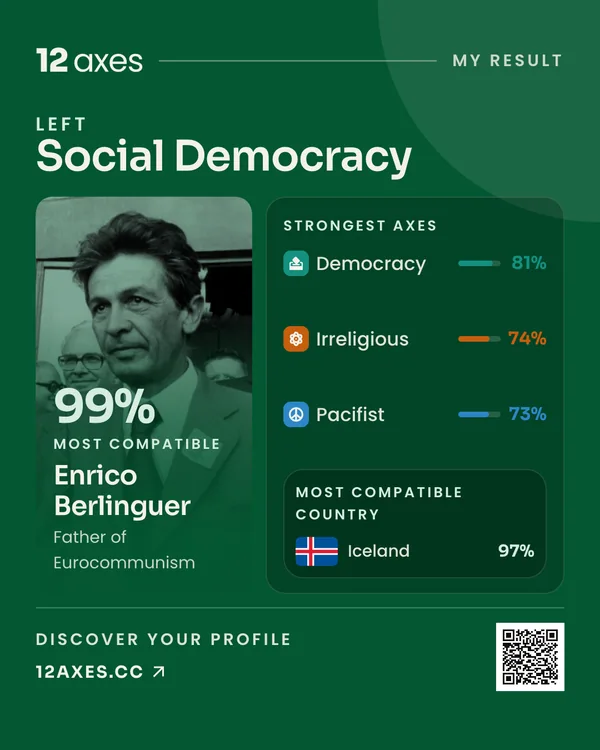
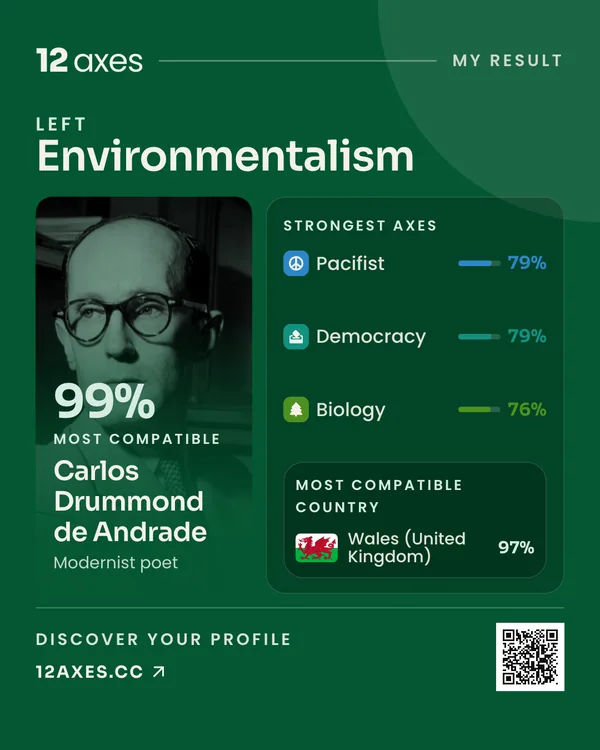
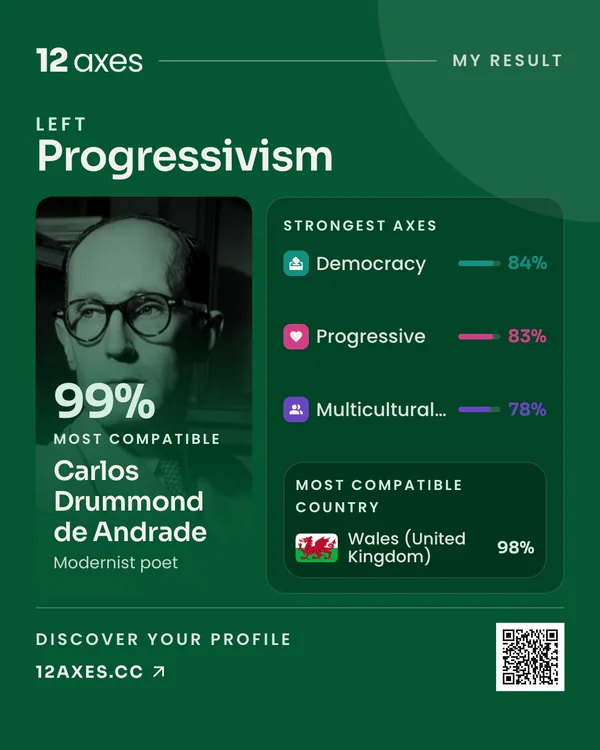

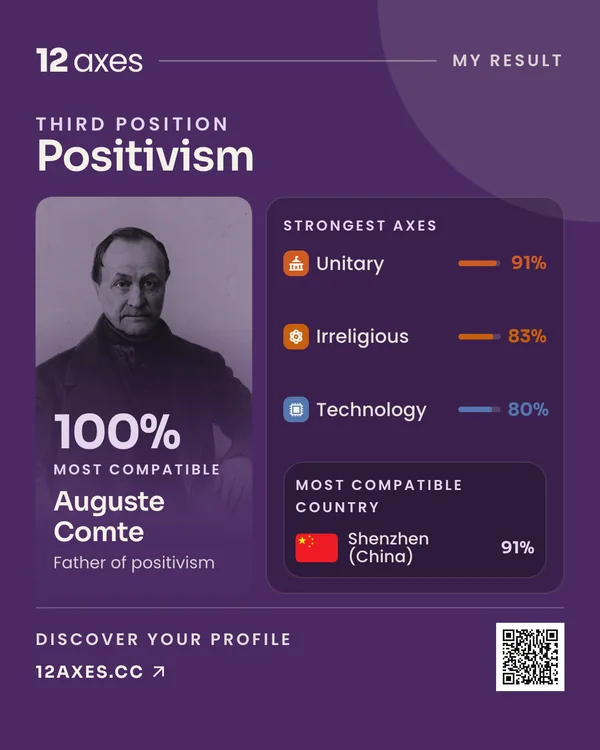
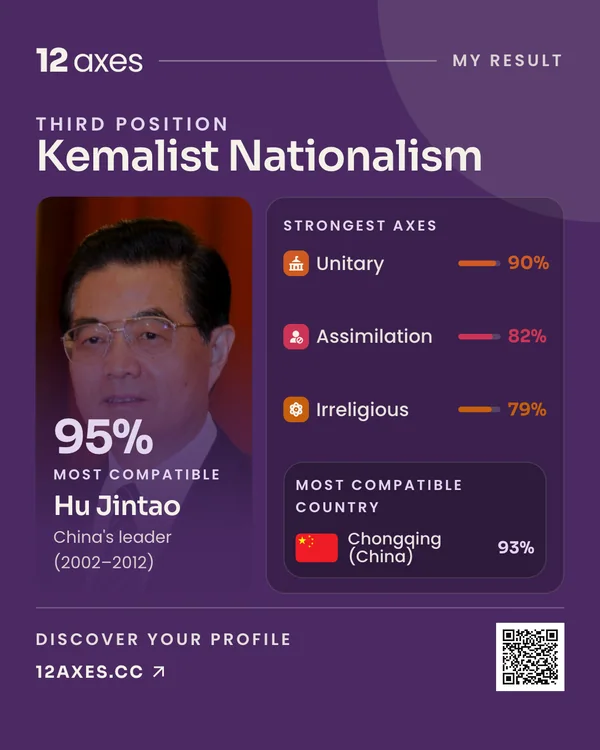
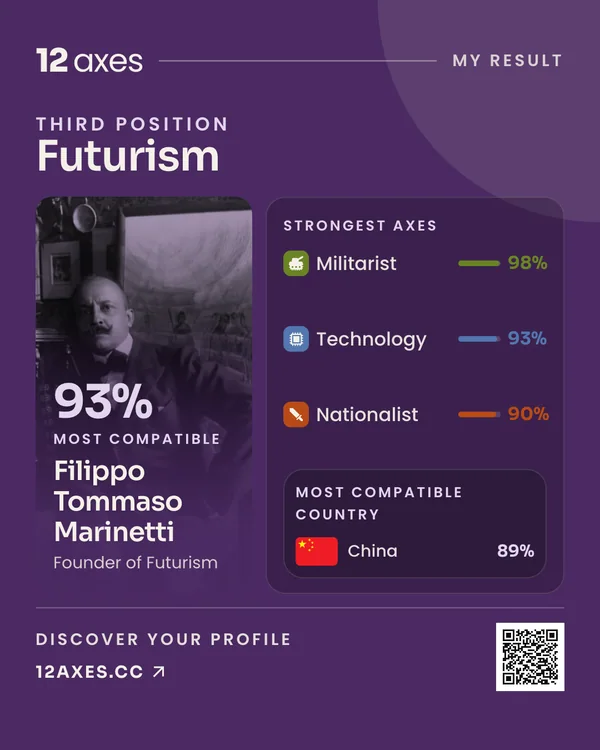


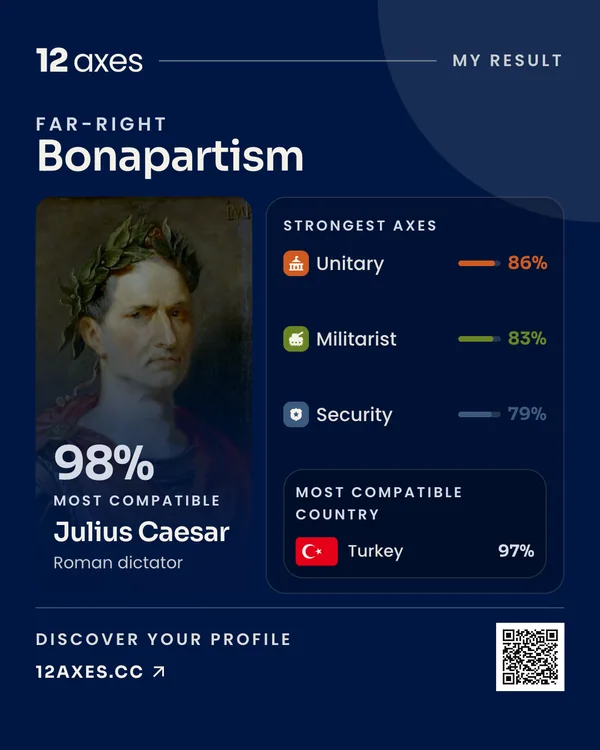

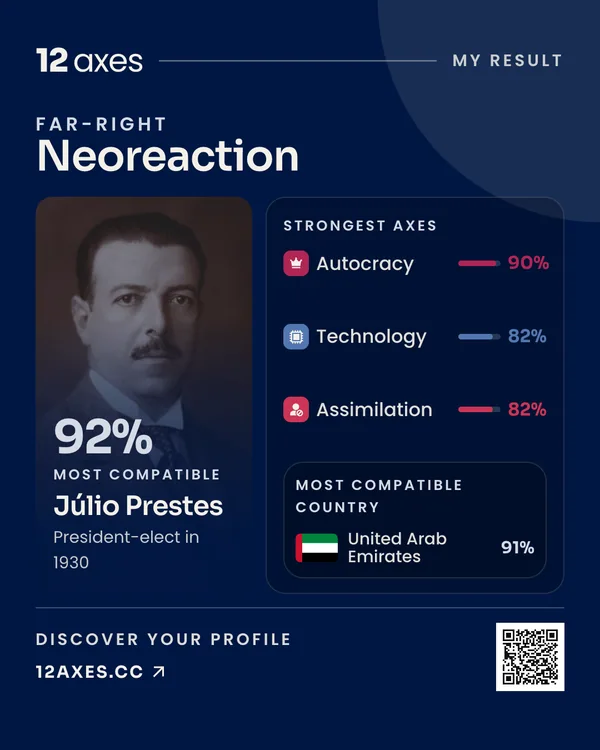
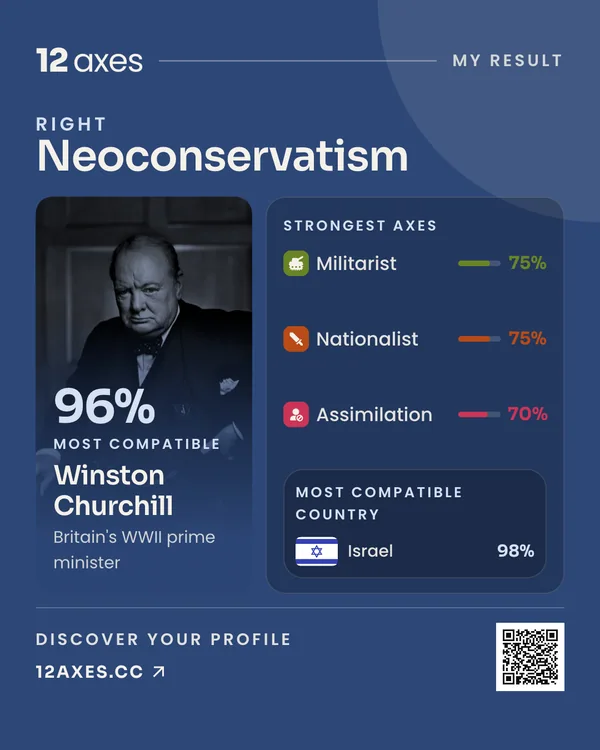



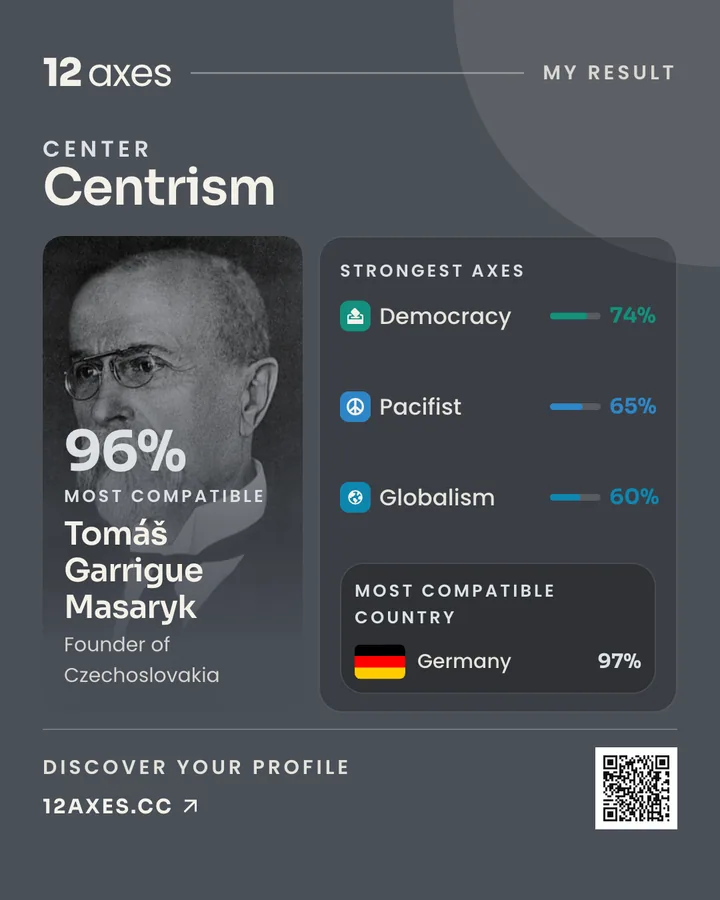
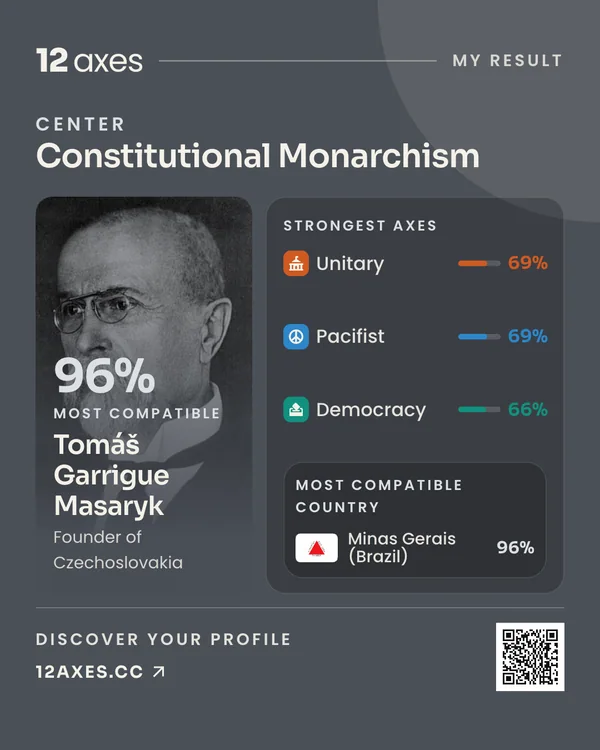
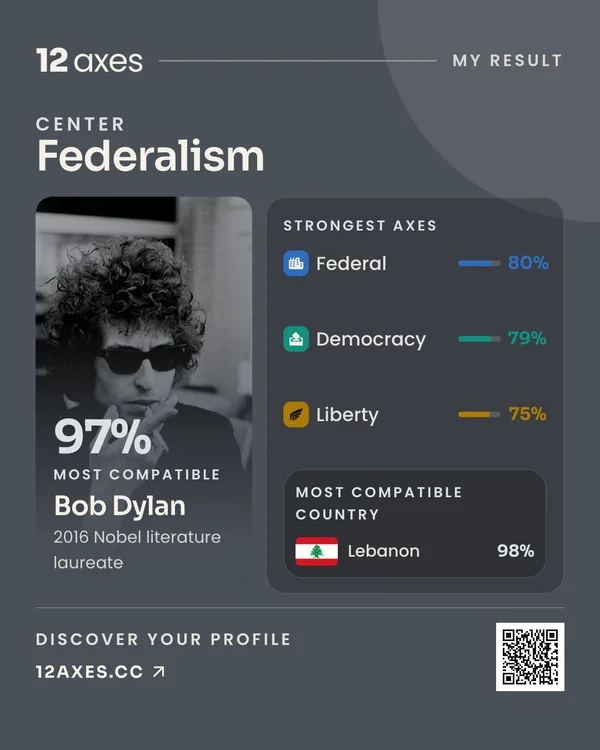
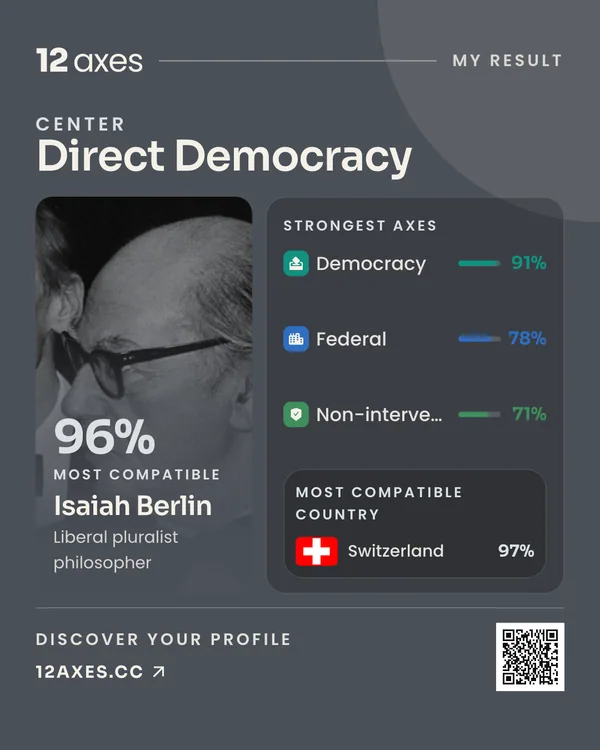
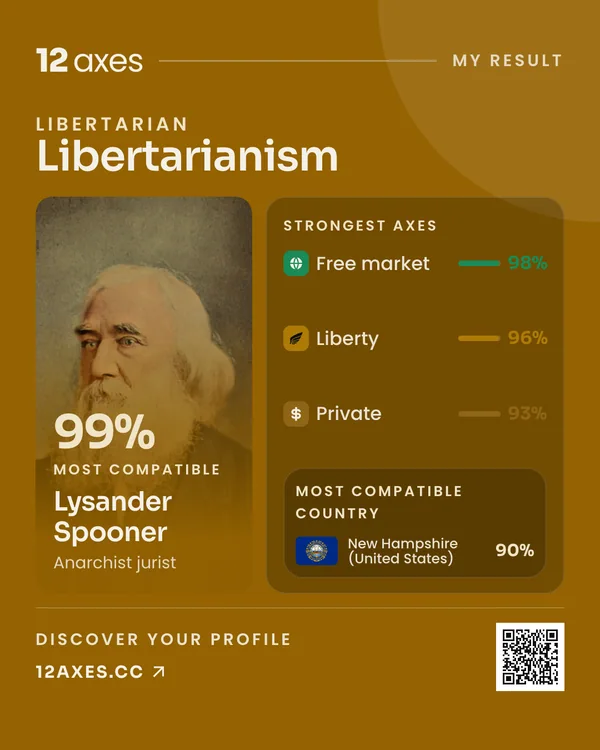





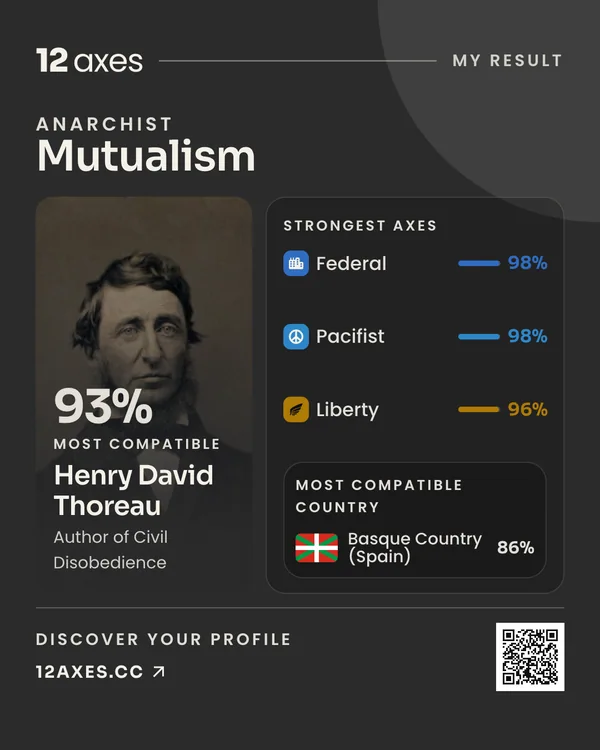
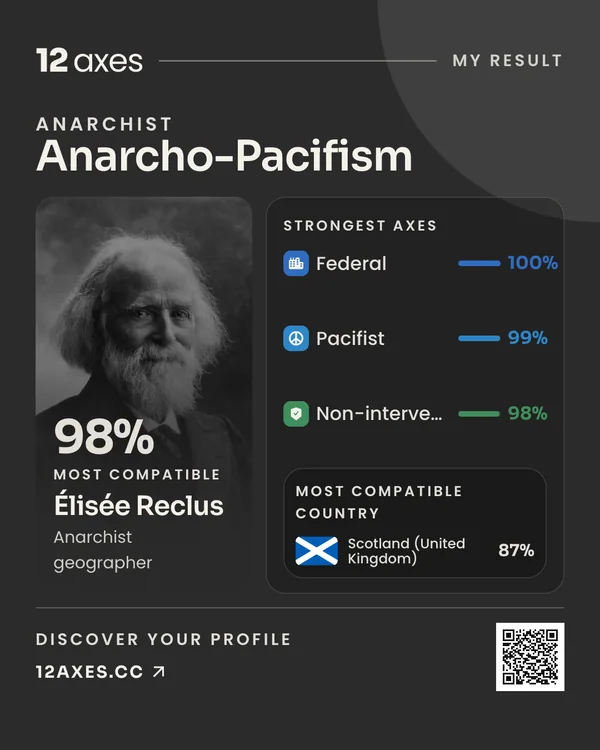
These pairs change one axis and hold the other eleven steady. Both results in a pair still match the same ideology most closely.
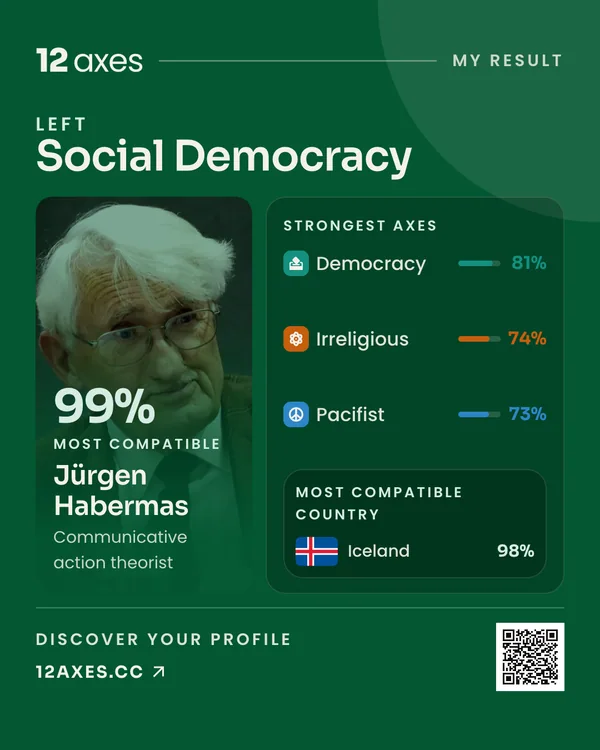
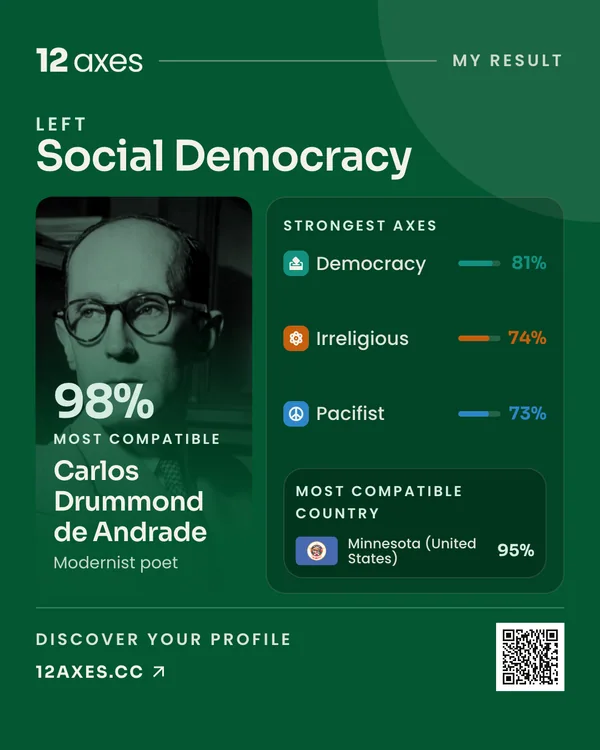
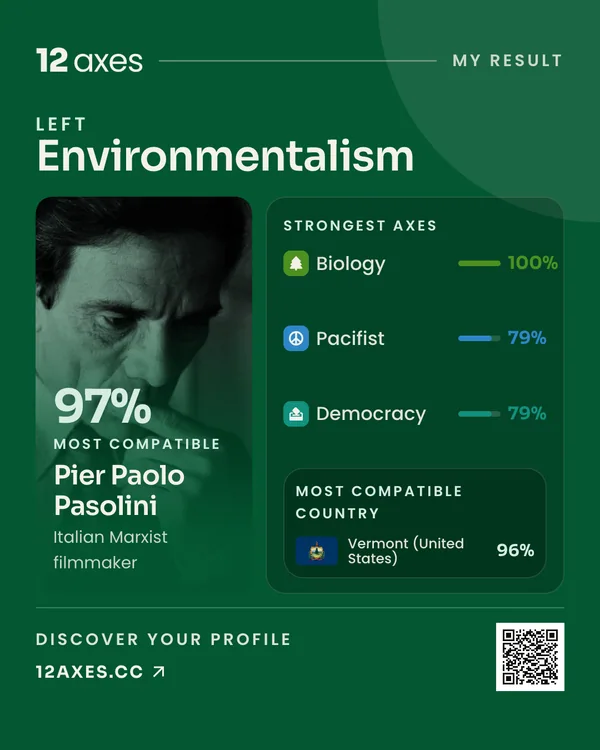
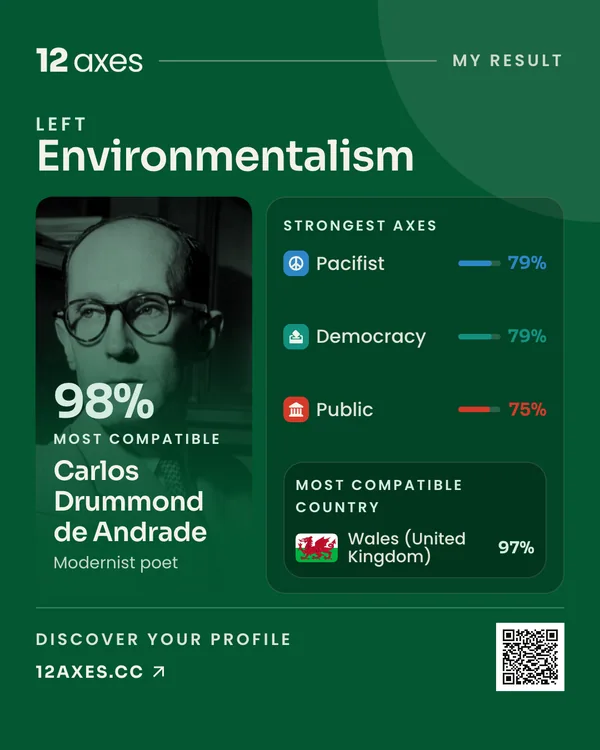
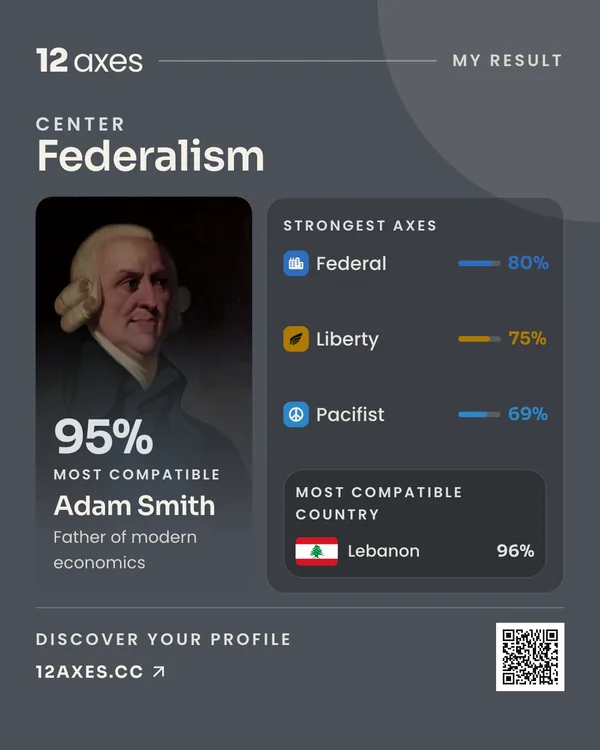
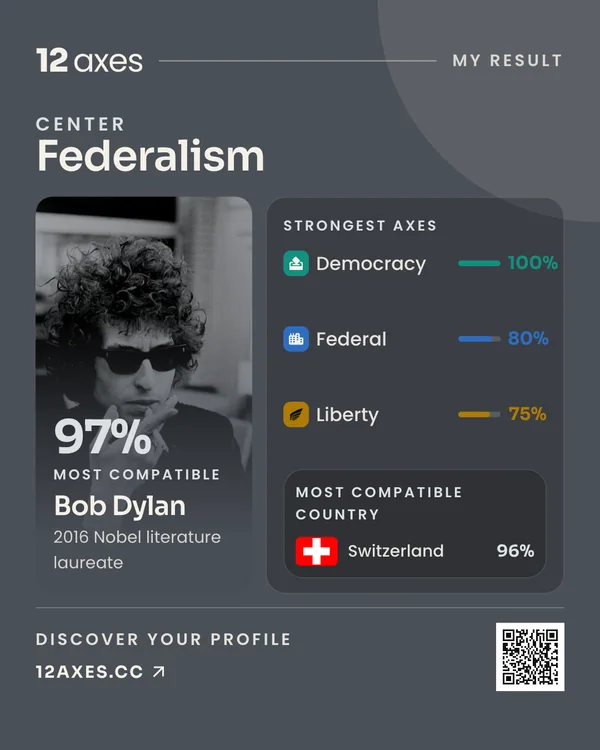
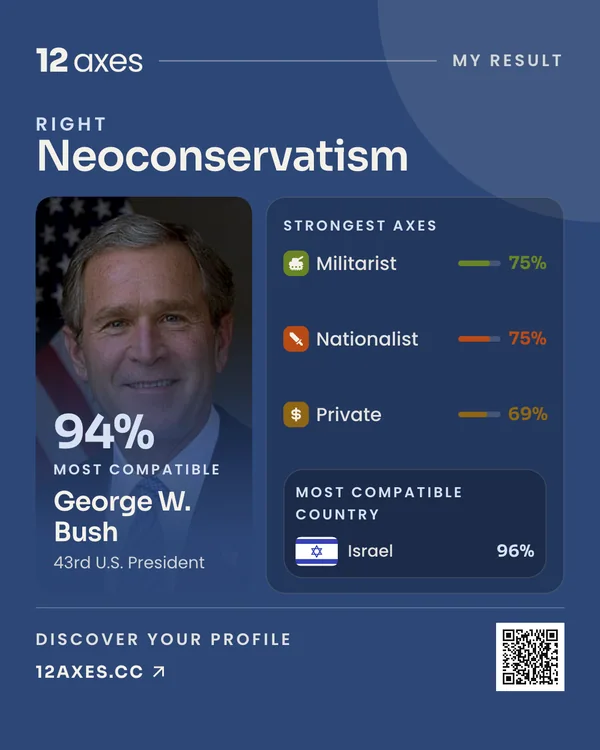
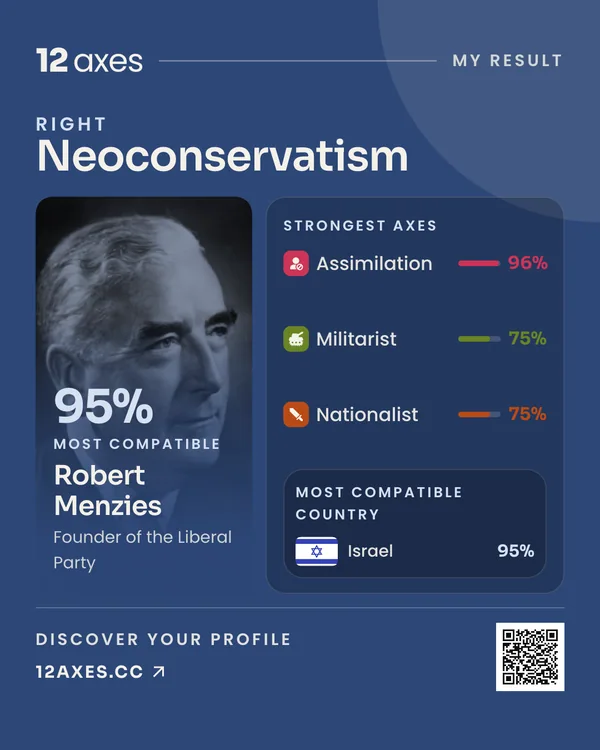




In the example, Representation is 74% Democracy and 26% Autocracy. Power is 28% Security and 72% Liberty. The result combines a preference about how people govern with a separate preference about the limits of public power.
A 50/50 score can arise from several neutral answers or from answers that pull in opposite directions. If a result surprises you, review questions on that axis and check which statements you interpreted differently.
Suppose you score 60% Freedom on the 36-question version and 52% on the 60-question version. The longer run might include surveillance or emergency powers, where your answers are closer to the middle. That can move the weighted average even if you answered shared questions the same way. To compare answers directly, use the same questions and review the axis that moved.
The report ranks reference profiles by how closely their axis patterns resemble yours. A 96% match describes similarity under the model. Country, figure and ideology scores each draw on a different reference list. Open the detailed comparison and check the axes where you are farthest apart.
Two people can have the same closest ideology and disagree on a specific issue. Use the friend invitation to ask the same questions in the same order, then read the differences on each axis. The example comparison shows the two scores separately.
Explore different score patterns. Each example starts from a catalog reference, and the report uses the same matching rules as the test.
Anarchist
Left
Left
Center
Libertarian
Center
Right
Far-Right
Both examples start from the same reference profile and hold eleven scores steady. Only Trade changes, so you can see whether it changes the ranking of nearby profiles.
Each bar counts the ideology profiles in a score band toward the first pole of the axis. These are curated reference profiles.
276 ideology profiles with a score on this axis.
276 ideology profiles with a score on this axis.
276 ideology profiles with a score on this axis.
276 ideology profiles with a score on this axis.
276 ideology profiles with a score on this axis.
276 ideology profiles with a score on this axis.
276 ideology profiles with a score on this axis.
276 ideology profiles with a score on this axis.
276 ideology profiles with a score on this axis.
276 ideology profiles with a score on this axis.
276 ideology profiles with a score on this axis.
276 ideology profiles with a score on this axis.
The examples use reference scores and illustrative variations. Each opens in the same report as an ordinary result.
The bars count ideology profiles in the catalog. They describe the reference set and cannot tell you how common a score is among test takers.
Yes. The ideology names the nearest reference profile. Compare the axis scores to see where two results with that label diverge.